
 By
By 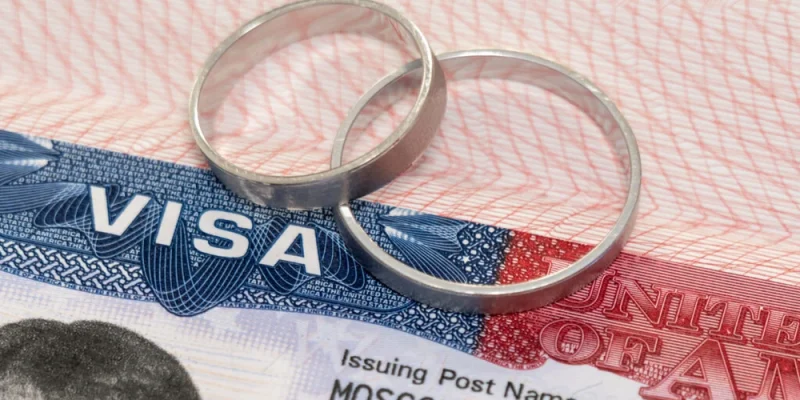
For couples separated by international borders, the K-1 fiancé visa offers a legal pathway to begin their lives together in the United States. Although the process is designed for engaged couples, it involves several legal requirements, government agencies, and strict timelines that can seem overwhelming to someone unfamiliar with U.S. immigration law.
Understanding how the K-1 visa works can help couples prepare for each stage of the application process and avoid common misunderstandings. This guide explains the basics of the K-1 fiancé visa, eligibility requirements, the application process, and what happens after arrival in the United States.
What Is a K-1 Fiancé Visa?
A K-1 fiancé visa is a nonimmigrant visa that allows a foreign national to travel to the United States to marry their U.S. citizen fiancé.
After entering the country, the couple must generally marry within 90 days. Once the marriage takes place, the foreign spouse may apply for adjustment of status to become a lawful permanent resident if they meet the applicable legal requirements.
The K-1 visa is intended for genuine relationships and is not designed as a shortcut to permanent immigration.
Who Is Eligible?
Several eligibility requirements must typically be satisfied before a K-1 visa can be approved.
Generally:
- The petitioner must be a U.S. citizen.
- Both individuals must be legally free to marry.
- The couple must intend to marry within 90 days after the foreign fiancé enters the United States.
- The relationship must be genuine and entered into in good faith.
In many cases, the couple must also demonstrate that they have met in person within the two years before filing the petition, unless a legal exception applies.
The K-1 Visa Application Process
The application involves multiple stages handled by different government agencies.
Filing the Petition
The process usually begins when the U.S. citizen files a petition with U.S. Citizenship and Immigration Services.
Supporting documentation commonly includes:
- Proof of U.S. citizenship
- Evidence of the relationship
- Photographs together
- Travel records
- Written statements
- Other supporting documents
Providing organized and accurate information helps immigration officials review the application efficiently.
National Visa Center Processing
After USCIS approves the petition, the case is generally transferred to the National Visa Center before being forwarded to the appropriate U.S. embassy or consulate.
The applicant receives instructions regarding the next steps, including required forms and scheduling.
Consular Interview
The foreign fiancé typically attends an interview at a U.S. embassy or consulate.
During the interview, a consular officer reviews:
- Identity documents
- Medical examination results
- Police certificates
- Evidence of the relationship
- Other required documentation
The officer evaluates whether the applicant satisfies the legal requirements for visa issuance.
Evidence of a Genuine Relationship
One of the most important parts of the K-1 visa process is demonstrating that the relationship is legitimate.
Useful evidence may include:
- Photographs together
- Airline tickets
- Passport stamps
- Text messages
- Emails
- Video call records
- Letters
- Statements from friends or family
Immigration officials consider the totality of the evidence rather than relying on a single document.
After Arriving in the United States
Receiving a K-1 visa is not the final step.
After entering the United States:
- The couple must marry within 90 days.
- The foreign spouse may apply for adjustment of status.
- Additional documentation and interviews may be required.
Until permanent residence is granted, applicants should carefully follow all immigration requirements and filing deadlines.
Common Challenges
Although many K-1 visa applications are approved, some cases encounter delays or requests for additional information.
Incomplete Documentation
Missing forms or supporting evidence can slow the review process.
Submitting complete and accurate documentation helps reduce unnecessary delays.
Relationship Questions
Immigration officials carefully review applications to confirm that the relationship is genuine rather than entered into solely for immigration purposes.
Providing consistent information and supporting evidence is important throughout the process.
Processing Times
Application processing times vary depending on government workloads, embassy schedules, and individual case circumstances.
Applicants should prepare for the possibility that processing may take several months.
The Importance of Legal Guidance
Immigration laws and filing requirements change over time, and every couple’s circumstances are different.
Attorneys often assist with:
- Evaluating eligibility
- Preparing petitions
- Organizing supporting evidence
- Responding to government requests
- Advising couples throughout the immigration process
Educational resources provided by Andrew T. Thomas Law and other experienced immigration attorneys can help couples better understand the K-1 visa process, common documentation requirements, and the legal steps involved from petition through adjustment of status.
Reliable Immigration Resources
The U.S. Department of State publishes official guidance regarding fiancé visas, embassy interviews, and required documentation.
The U.S. Citizenship and Immigration Services also provides detailed information about filing procedures, eligibility requirements, and adjustment of status after marriage.
Reviewing official government resources alongside qualified legal guidance can help couples better understand the immigration process.
Conclusion
The K-1 fiancé visa provides an opportunity for engaged couples to reunite in the United States and begin building a future together. While the application process involves multiple stages and careful documentation, understanding the legal requirements can make the journey more manageable.
By learning how the K-1 visa works, preparing thorough evidence of a genuine relationship, and staying informed about each step of the process, couples can approach the immigration system with greater confidence and clarity. Careful preparation and a solid understanding of the legal process help lay the foundation for a successful transition to married life in the United States.










Comments